

Ship name / Flight number: Orontes
Arrival Date: 09/04/1959
Born in Weston-super-Mare, Somerset on the swift flowing Bristol Channel, my parents were loving and provided all necessities within their means. Dad served in the Medical Corps in both World Wars. I accompanied him to a medals presentation in London’s historic Guild Hall. Mum was first in the Land Army followed by a nursing career.
My “departure” from a comfortable childhood really began when aged eleven an uncle gave me a copy of Robert Louis Stevenson’s “Treasure Island.” Basically, the story about a young lad, Jim Hawkins, who joined the high-masted sailing ship “Hispaniola” in Bristol as cabin boy. Pirates, treasure, and visits to beautiful tropical islands in the Caribbean followed. At that point, serious studies were replaced by sitting at back of class daydreaming until my “escape” at age fifteen. My first attempt to join a ship in Bristol failed after only one night aboard when reported to school authorities. I was escorted home to worried parents.
April 1959. Aged seventeen, now back in Weston after the Canadian trip, Australia again became top of mind. I remember a visit with parents to Australia House, London. Following sandwiches and tea documents were signed. Within a few weeks I became a “Little Brother,” under the guidance of “The Big Brother Movement” bound for Australia aboard “s.s. Orontes”. (One of P.&O’s oldest ships, it had the year before been involved in a collision on the River Thames with a landing craft. A watercraft I was to become familiar with in later years.)
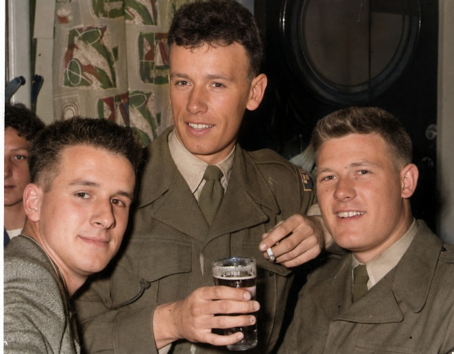
I shared a two-berth cabin with Gordon McRitchie, a lad my age from Dundee. We got along well and developed a strong friendship that was to last several years. His story is featured elsewhere on this website.
The journey was for us young lads a lot of fun with fascinating shore excursions at either end of the Suez Canal and at Columbo, Ceylon where we ascended by cable car magnificent, tropical Mt Lavinia. Perhaps the most notable memory of the voyage was to occur in The Arabian Sea a day prior to our intended arrival in Columbo. Around midday Orontes engines fell silent as we drifted slowly on a glass flat sea. Using the ship’s loudspeaker system our captain to announce a tragedy aboard. The previous evening it seems an elderly lady had collapsed while dancing, never to recover. Not having the refrigeration necessary to meet health requirements of authorities in Columbo burial at sea was ordered. And so just like in the movies, we watched as the hessian-wrapped body, after a brief ceremony, slipped quietly off a board into the shark infested depths below. Ironically, while training as a young sailor I was taught how to prepare a hessian wrapped corps for burial at sea, starting at the feet using cable stitching up a center fold to the head, the last stitch passing through the columella (base of nose), as if final confirmation of death. Sorry, I digress!
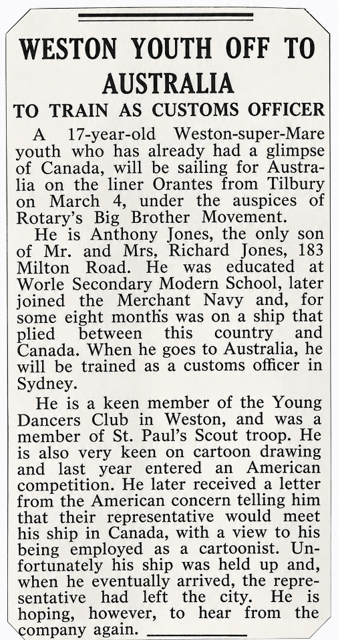
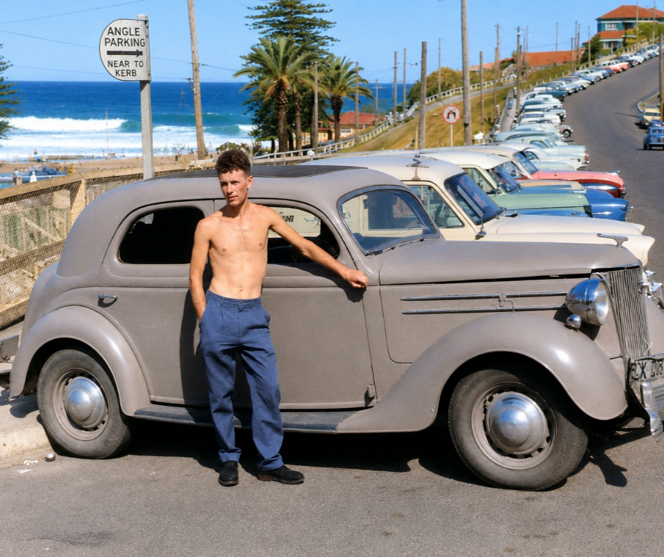
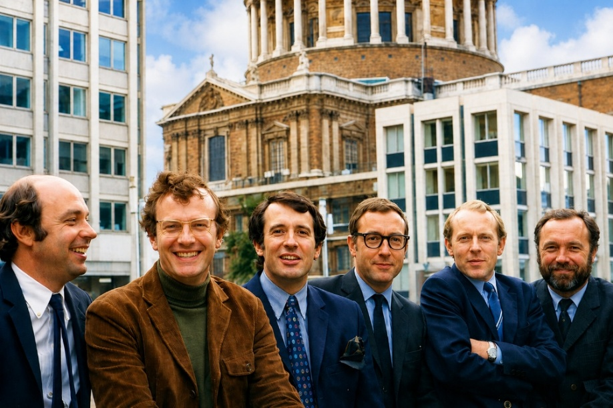
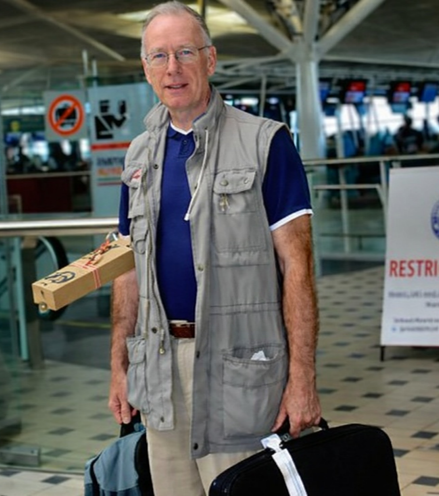
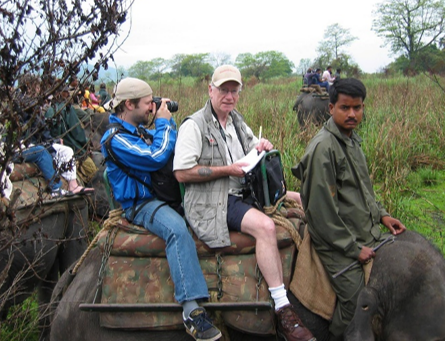
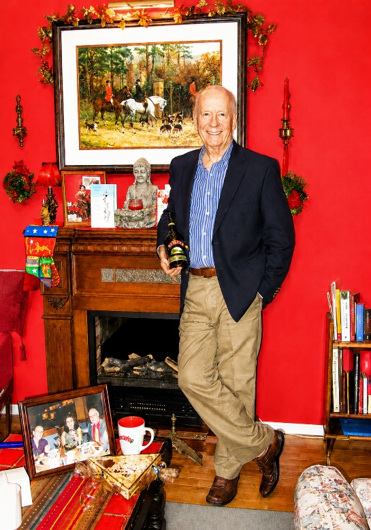
Early morning on April 9th 1959, Orontes ploughed steadily through heavy seas navigating carefully the entrance to “The Heads,” opening up my first view of the magnificent Sydney Harbour. Met by BBM’s Mr Mansell, we stepped ashore at Circular Quay where members of the local press were looking for interesting stories.
One of our group and good friend, Allan Bleeker had worked in the famous Harrod’s Department Store in London where staff claimed they could provide any product worldwide. Allan’s job was in the pets department. Sounded like a story worth digging into, so an enterprising journalist contacted management at Taronga Park Zoo. An interview was arranged and before long Allan was shipped off to one of the zoo’s outposts in the Highlands of New Guinea. I was to meet him one last time on his return visit to Sydney during which he told about exciting experiences with local native tribes, who at that time were still quite...tribal, including descendants of head-hunters, as I was to encounter several years later.
Gordon and I were taken to the BBM hostel in Homebush. My only memory of the hostel was breakfast first morning. Minced meat and gravy poured onto toast, topped with a fried egg, which for me was…not enjoyable.
Within a day or two I was sent off to my first job. Hardie Rubber Company. A few minutes instruction showed me how to match the rubber sole of a shoe with the leather upper, place in a machine, depress a lever with my foot generating the heat necessary to bond the two components...covering me with a cloud of stinking rubberized black smoke. The supposed new career lasted until lunchtime when I politely told the floor manager to, with respect, stick the job up his downpipe.
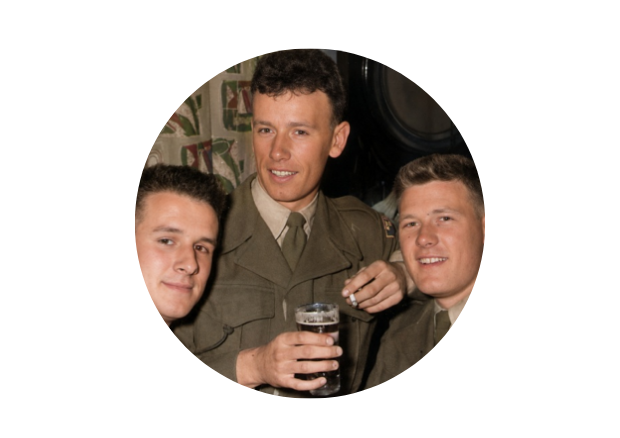
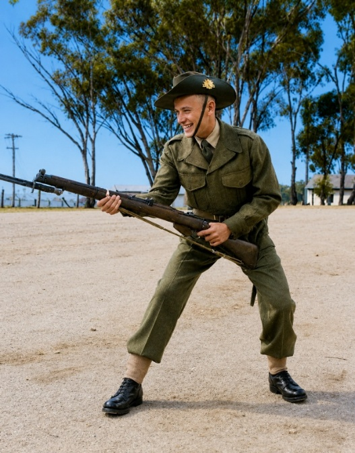
It seems Gordon was equally displeased with the job offered him. A brief conference between us followed, then bye-bye hostel. I vaguely remember we found a landlady in Balmain nice enough to take us in. No job and only a few pounds between us our days were spent wandering the streets of downtown Sydney. Uniforms had always appealed to me, and I soon noticed the attraction of “shielas” to Diggers, soldiers dressed smartly in jungle greens, spit and polish boots, and brass accessories that sparkled brightly in the sun. Within two or three weeks I had enlisted for six years, accompanied by an unconvinced Gordon.
Arriving by train in Wagga Wagga early one very cold morning we were trucked to our “home” for the next three months, Kapooka! After adjusting to being referred to as “pommie bastards,” we managed the intensive training quite well getting in trouble only once following our first weekend leave in the town. Waking up one morning behind bars guarded by the military police it seems we attempted to gain access to the town’s social club. Refused entry, we were found next morning sleeping peacefully under a truck. Paraded before our company commander, a major, we were severely reprimanded. If I recall correctly, the specific wording included, “If you are going to disgrace the proud Australian uniform you pommie bastards should f..off back to where you came from.” I took his words seriously, pulled my socks up and went on to enjoy an exciting six years. Gordon on the other hand could not adjust to military discipline and was discharged a year or so later.
Following advanced infantry training at Ingleburn and Holdsworthy, we were posted to Third Battalion, Royal Australian Regiment located in the Brisbane suburb of Enoggera. Also in our Charlie Company were brave veterans of the Korean conflict. Most admired, and friend to us young soldiers, was Keith Payne who in later years was awarded the Victoria Cross for incredibly brave service in Vietnam. While on a regular afternoon visit to The Railway Hotel, Woolloongabba, friends and I were entertained by three obviously talented young lads, later to be known as The BeeGees.
The army at this time was training for jungle warfare in S.E. Asia, prompted no doubt by Chinese Chairman Mao Zedong’s expressed interest in forming a colony in remote Northern Australia. Chinese communist soldiers were already causing problems in Indonesia and Malaysia. Next would come New Guinea then only a short crossing into remote Northern Australia…according to Mao’s stated theory. After completing the dreaded Jungle Warfare Course at Canungra, Queensland, I was transferred to Headquarters Intelligence Section. Separate living quarters. No more parades or guard duty. Hurray!
Meanwhile, the army had recently purchased several refurbished made for WW2 Landing Ships Medium. Now in need of soldiers with seagoing experience, I was transferred to the most scenic army establishment at Chowder Bay on magnificent Sydney Harbour. And there I became an army sailor.
I experienced an incredible voyage north through the Great Barrier Reef, across to New Guinea, into the South China Sea to the Admiralty Islands, Singapore, transiting up both east and west coasts of Malaysia(as it was then called), around the huge island of Borneo, stopping occasionally in other ports, some not charted officially as Australian politicians were considering involvement in South Vietnam. On one particularly exciting adventure I was appointed sergeant in charge of a supply train departing Jessleton/Kota Kinabalu, rattling along a narrow-gauge rail line ascending through steep jungle covered valleys to Tenon and Beaufort. My final course before discharge was at the RAAF base, Richmond, where I was trained as a Loadmaster on Hercules C-130 aircraft.
Interesting co-incidence while at Chowder Bay was my senior officer, a fellow ex-Little Brother who had arrived a few years earlier. Mike Holton retired as a Brigadier General. We remained in contact until his untimely death.
Following was one year of study for the Public Relations Institute exam, after which I obtained a three years civilian appointment in the army’s PR office, Victoria Barracks, Sydney.
I’d better take some short cuts in my story or risk further boring you with endless verbosity. I returned to England for the first time in 1969 sailing, I think on Himalaya, via Acapulco, and the Panama Canal.
Thanks primarily to a very nice reference from the Lt Colonel in our small army PR office, I landed an interesting marketing position promoting Britain’s recently introduced credit card, Barclaycard, at the Bank's London head office. Official postal address, St. Paul’s Churchyard. After three years I met and married a beautiful woman from Guyana. We returned to Sydney, this time enjoying a wonderful honeymoon cruise via Cape Town.
On arrival we bought a home in Castle Hill west of Sydney, soon after landing a position as marketing manager, South Pacific for the two beautiful SFO-based luxury liners, “Mariposa” and “Monterey.” Work took me to Fiji, N.Z., Tahiti, and Hawaii. The agent for an Australian singing group asked me to arrange a “working passage” to SFO, which I did, accompanying them as far as Suva. Well-deserved success for the original “Seekers” came quickly thereafter.
Moving along, next came management of “Great West Travel Centers,” a group of travel agencies in Sydney’s western suburbs. Our daughter, Sarah, was born in 1974. While my wife Jean loved Australia, she/we had no local relatives. Not a problem for me. Big problem for Jean. So away we flew to her relatives in Toronto, Canada, stopping off with our baby for a few days in Honolulu.
I was able to continue in the travel industry serving as marketing boss first with a chain of retail agencies, then with Budget and Thrifty Car Rental head offices based in Chicago and Tulsa. Traveling to annual conferences and trade shows in London and Berlin, I was usually able to add on a weekend visiting Weston. I last visited about twenty years ago and have no plans to return.
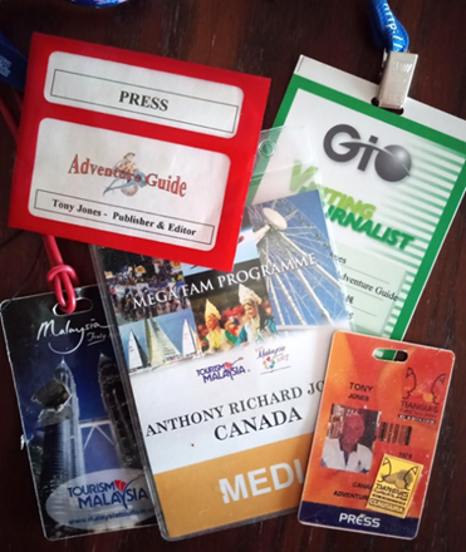
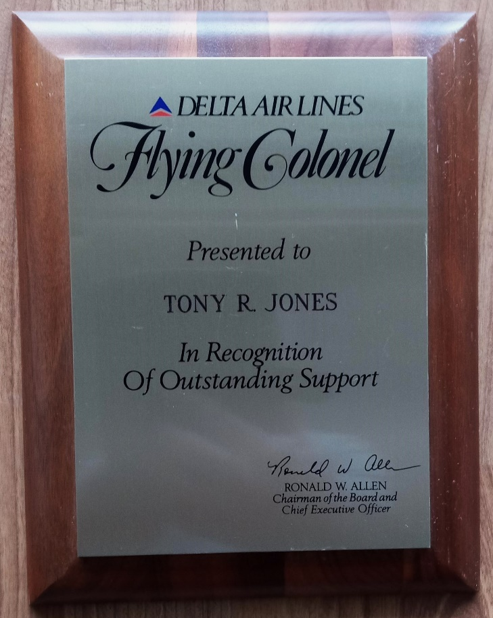
In 1998 I registered the domain name www.AdventureGuide.com. Featuring adventure and eco-travel I instantly metamorphosed into that of “Captain Tony, travel writer.” Over the following ten years or so the website enabled me to attract all expenses paid media trips, mostly around the Caribbean, Central America, the Holy Land, and of most personal interest to several countries in S.E. Asia first visited while in the army. The website is now retired but I continue to own the unique domain name.
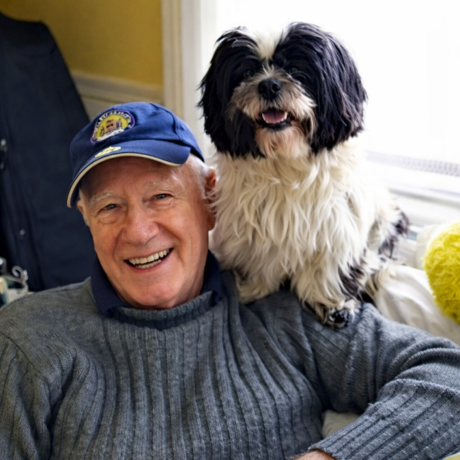
Now living in British Columbia’s magnificent Fraser Valley surrounded on two sides by snow-capped mountains, the Pacific Ocean to the west, the U.S. border is just a fifteen-minute drive south. Long divorced, but a happy bachelor. Joined two ukulele circles, then as is my ADD generated nature quit after a couple of enjoyable years. Now aged eighty-five, life is good.
One regret? BBM’s Mr Mansell and his team gave me a warm welcome to Australia in 59. A more mature Tony Jones would have at least said “Thank you Sir” before taking off on my own."