

Dennis Halton
Ship name / Flight number: RMS Mooltan
Arrival Date: 21/07/1952
Dennis Halton b.1935
I was born in Bingley, west Yorkshire, on 11 December 1935 and grew up in the village of Gilstead – a mile up the hill closer to the moors. We used to fly our kites and model gliders on the moors and tickle trout in the woodland streams. There was an old, burnt-out mansion with terrazzo fireplaces built by Sir Titus Salt that we played hide and seek in – it was a beautiful location to be brought up in. I was an only child but I had lots of friends in my street. We lived in Gilstead until 1947, when I turned 12 years old.
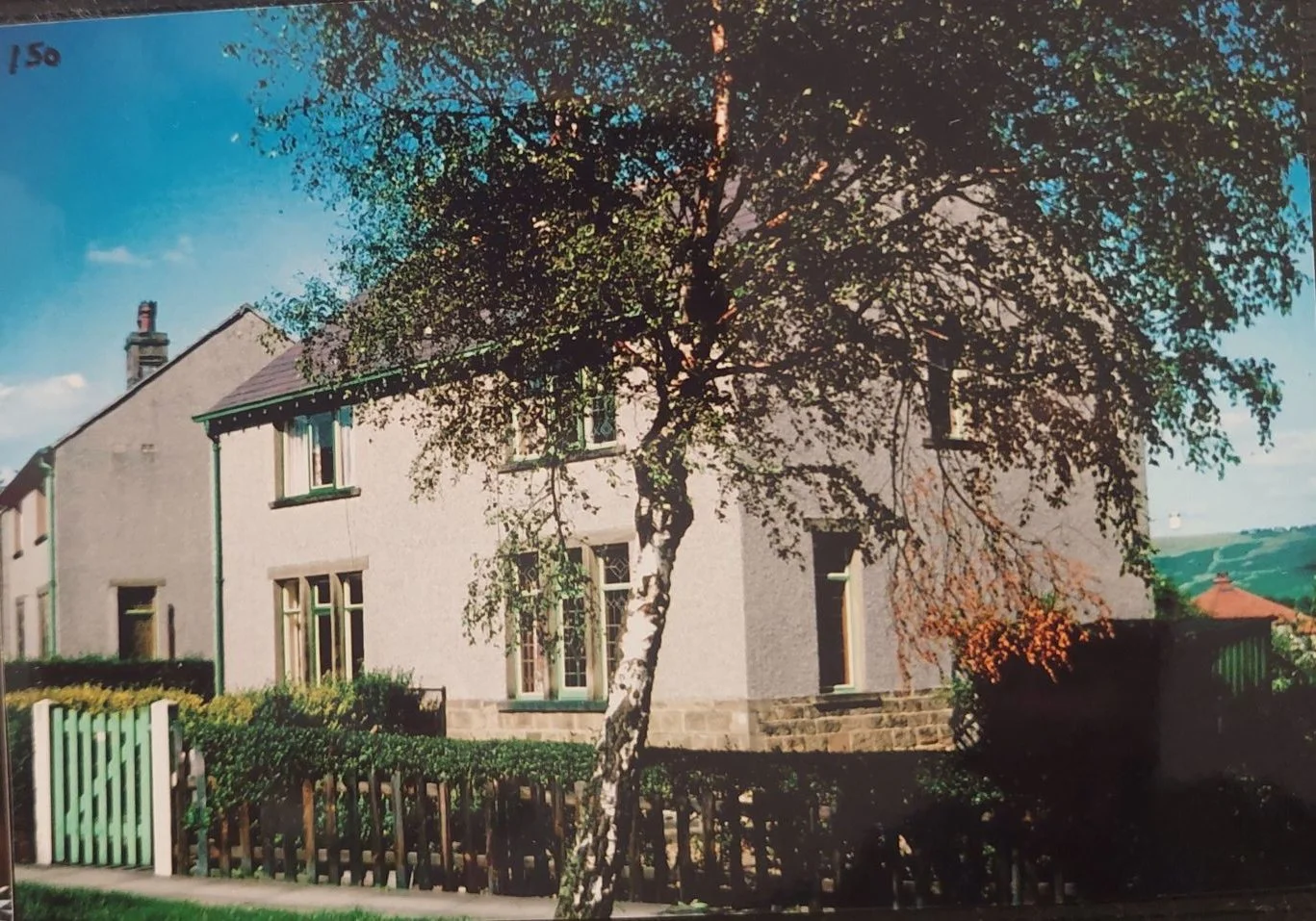
The house we lived in in Gilstead
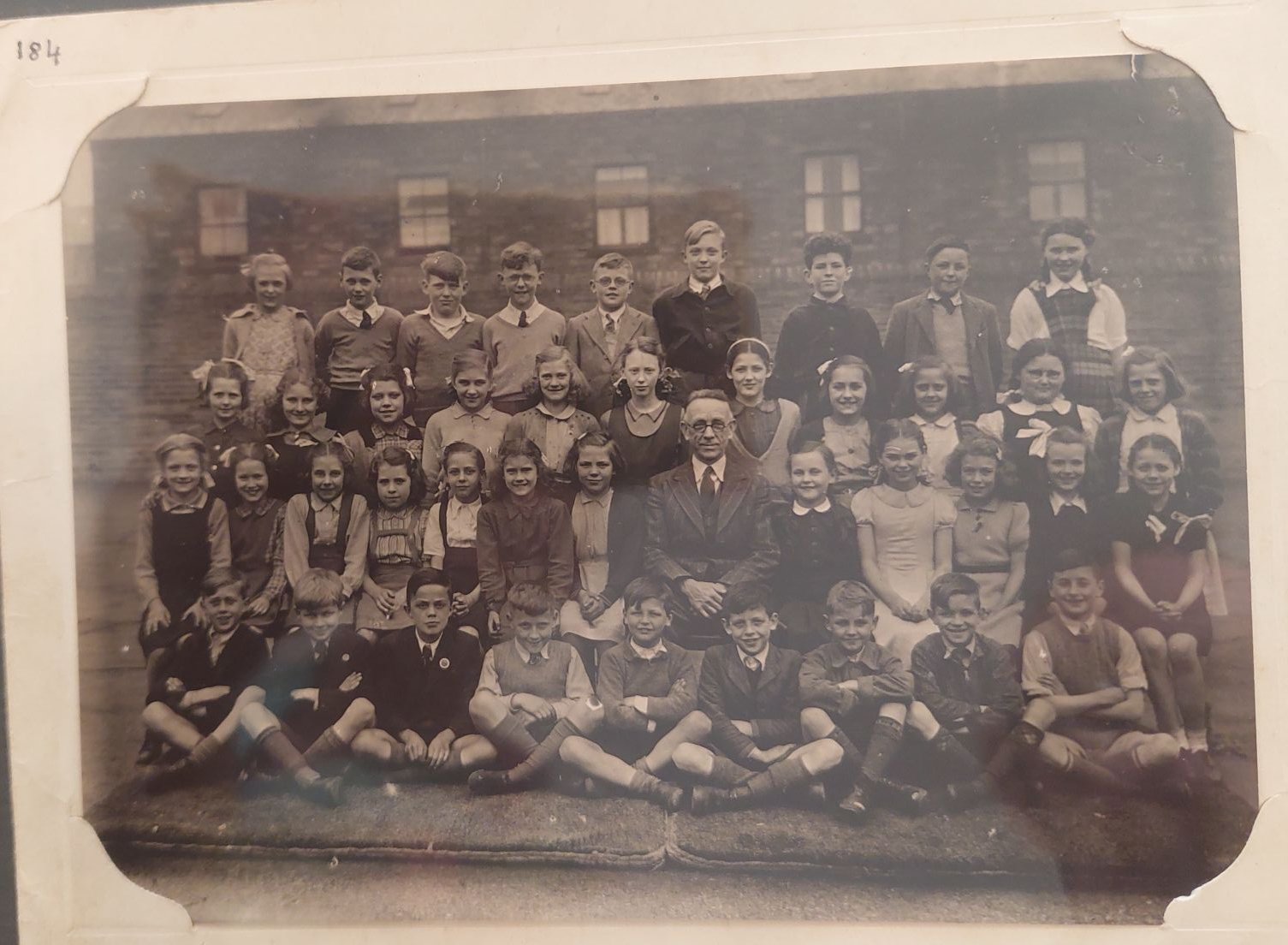
Morning Road Primary School, 1947. Mr Parkinson is in the middle and I am in the front row on the right.
I went to Belgrave Road Infants School and then Mornington Road Primary School in Bingley. Mr Parkinson, the headmaster at Mornington Road was fantastic. At the end of each school year, he organised a music concert to farewell the students who were leaving, and each year he advised is to ‘remember that you are responsible for what goes into your mouth and you are responsible for what goes out of it’. It is the best advice to live by. As a result, I’ve never drunk or smoked. I wrote to Mr Parkinson every year until the day he died. (I’ve been writing to a pal from school whom I met when I was five years old until he died two years ago).
I was christened into the Church of England but one day after Sunday School, I was playing in the woods with the other children and they left me tied to a tree. My mother was worried and shocked and said that from now on, I could go to the Methodist Sunday School with my friend, David.
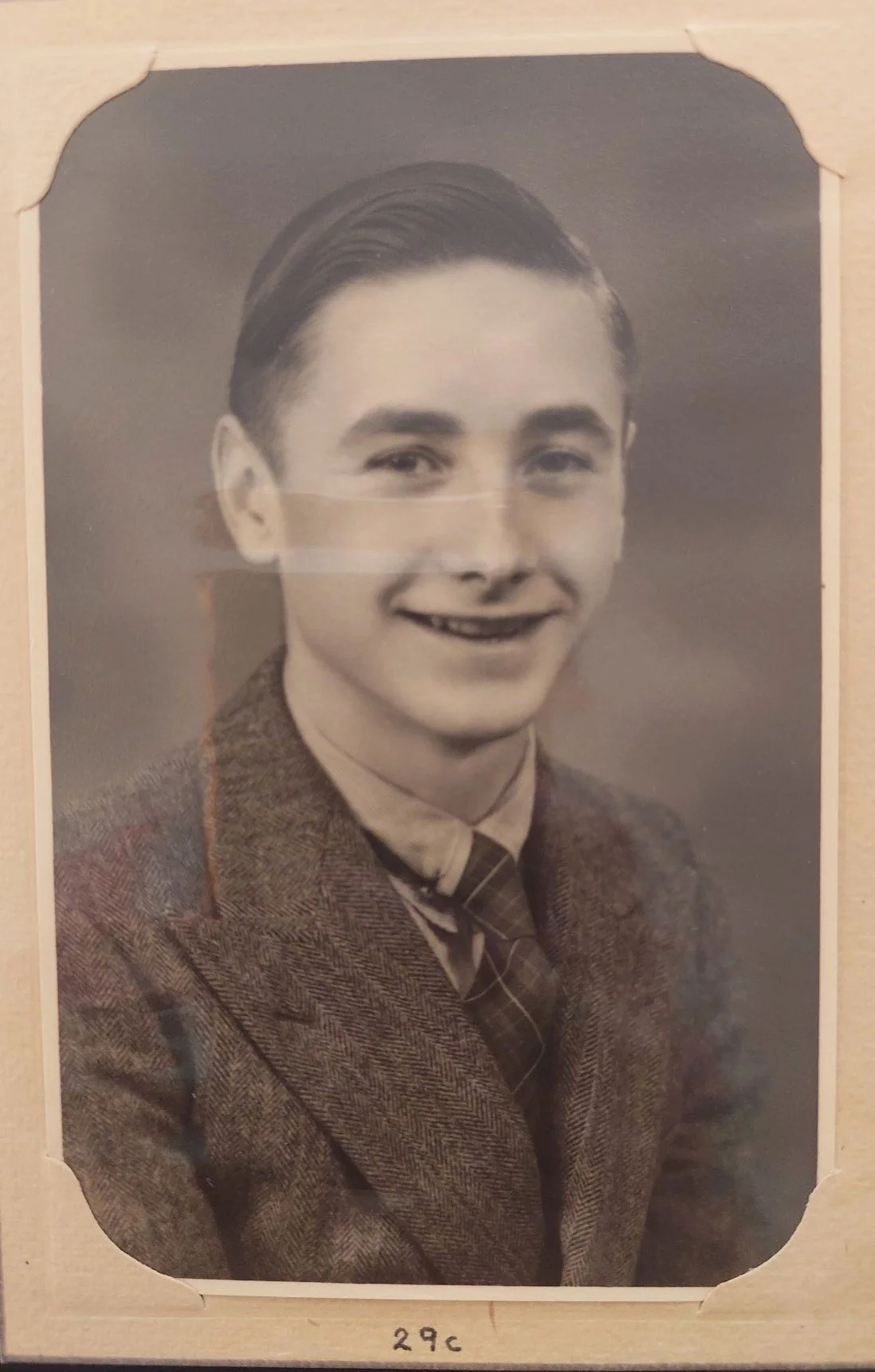
Me in 1952 when he was 16 years old
I sat the 11+ exam in 1947 when there was a huge snow-fall. We had to go to the modern school to sit the exam and all the buses were cancelled. David and I tried to get to the school by walking along the top of the stone walls that run between farms. If a farmer had left his gate open, we’d drop down into the snow!
I passed the exam and went to the public grammar school in Bingley which was co-ed. I studied English, French, German, Latin, Geography, Science. English was my worst subject and my English teacher, Mrs Hurst, said ‘Halton, I don’t know what you will ever be’. When I visited Bingley in 1966, I went to see her to show her what I’d become.
I made a friend for life on my first day at the grammar school – Alison Wildbore. She was also an only child and she was like a sister to me. In 2010, I tried to find her and I was sad to find out that she’d died.
I’ve always been an independent person. I used to do lots of cycling, especially on Sundays. Once I turned 14 years old, I was old enough to stay in youth hostels and I did a 700-mile tour of Wales staying in the hostels.
I left school when I was 15 years old to start an apprenticeship as a draftsman at a big engineering company in Bradford. My friend David, who sat the 11+ exam with me, was also an apprentice there and we both went to the Tech school in Keighley, three nights/week. I stayed for about 12 months.
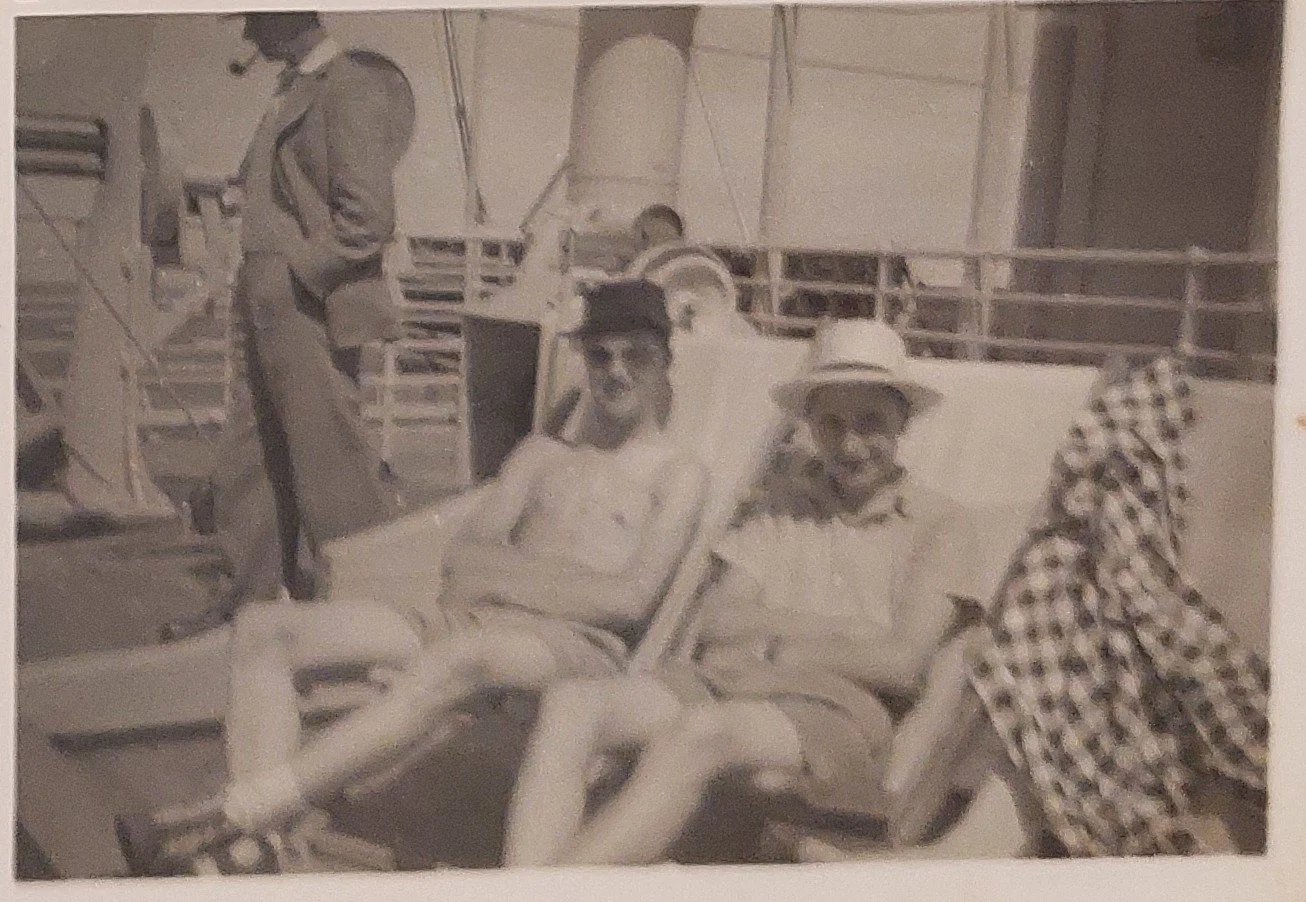
I am sitting on the right on RMS Mooltan deck
I heard about the BBM through a careers evening at the grammar school. When I was 16 years old, I got a notion that I wanted to go to Australia and I told my mum and dad this. My dad took me to Australia House in London and then on to Tilbury Dock.
I sailed on the RMS Mooltan and kept a daily journal on the trip, mostly of what we had to eat. The food was amazing – fruit, meat, cakes – things that we couldn’t get in England because of the post-war rationing.
We arrived in Sydney on 21 July 1952. We weren’t allowed to leave the wharf in Sydney until we’d signed up for a health fund. I still have the same health fund today!
Mr Mansell said that I was the first Little Brother to come out who wanted to do gardening. My dad was a professional gardener – I’ve been gardening since I was three years old. I was taken to the farm at Calmsley Hills and helped with repairs because I didn’t want to learn about milking cows.
After a couple of weeks, I was taken to the hostel at Homebush because the NSW Governor was visiting in September and they wanted someone to make the grounds look presentable. I dug garden beds, planted flowers in the front yard and vegetables in the backyard, built a curved gravel driveway. I was up late the night before the official party was due to arrive watering the garden beds to make the soil look black and show off the colourful things growing in them. I caught a chill and was in bed the day they came to visit. Never-the-less, the Governor came to visit me and sat on the end of my bed to thank me for my work.
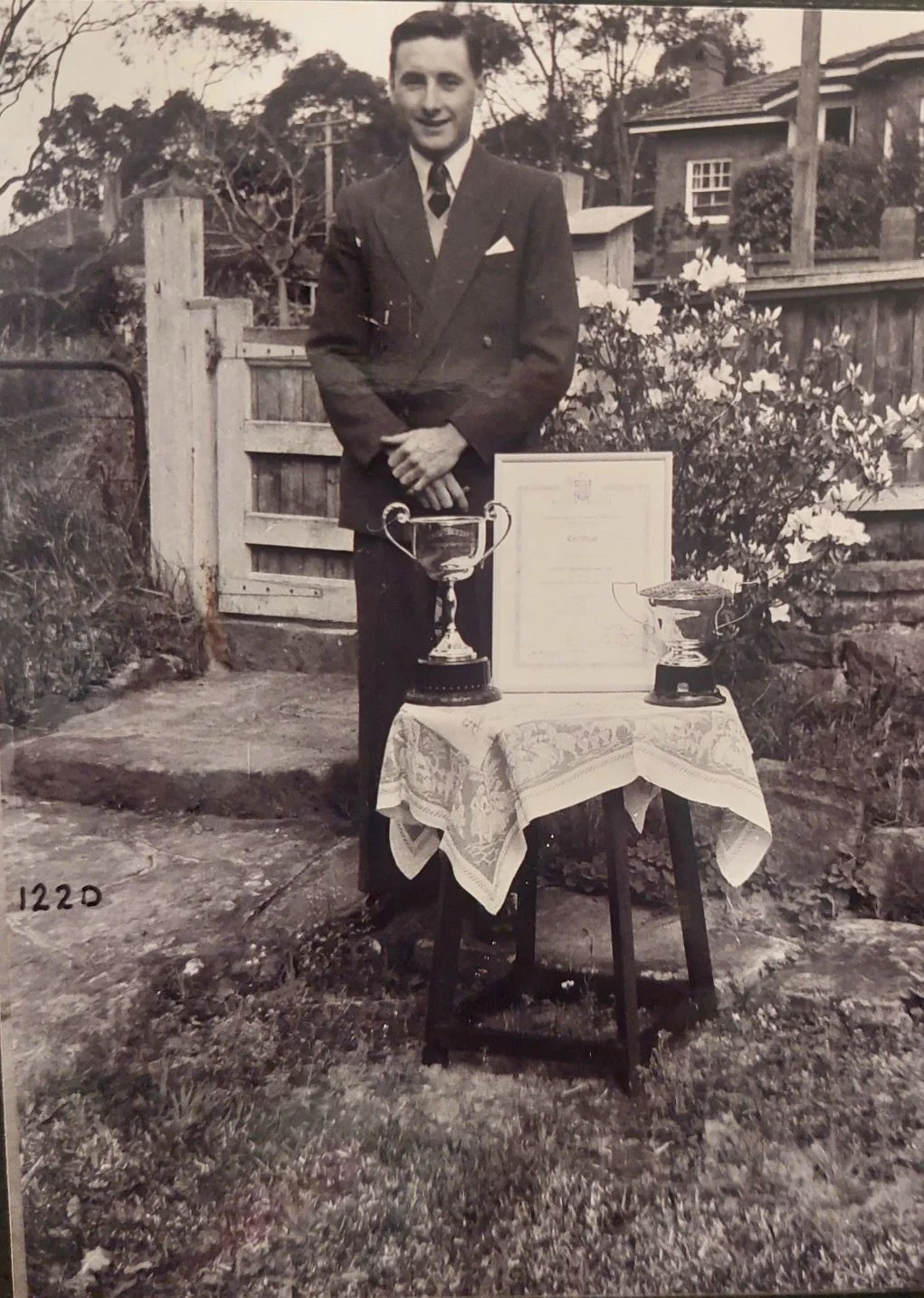
With my prizes and certificate for horticulture, 1956.
The following day, 29 September 1952, I started a new job at Meredith’s Nursery in Frenchs Forest. I was offered a bed in the migrant camp nearby, but the beds were so short that I had to put a jumper around my feet and hold it in place with a belt! I opted for the old couch in the shed at the nursery instead.
I enrolled in Horticulture at the Sydney Technical College at Ultimo but I couldn’t get back to Frenchs Forest at night by public transport, so I started boarding at Chatswood. The only problem with this was that I was earning £3/week but paying £4/week in board! I had to get a weekend job to meet my expenses. I worked on Saturdays at a flower shop in Epping owned by Mr and Mrs Booth, who were caretakers at the BBM Hostel.
When I was doing my tech assignments, sometimes by candlelight because I wasn’t allowed to use the electric light after 8pm in my boarding house, I had a picture of Mrs Hurst (my grammar school English teacher) and a picture of Alison Wildbore beside me. Every time I finished an assignment, I’d ask them both, do you think this is any good? They inspired me. I was awarded two prizes at the end of my course and an honours certificate.
After the flower farm, I went to work for a doctor in Epping who wanted to start a nursery so he would qualify as a primary producer (and get a tax deduction for his business). Then I went to work at Ryde School of Horticulture on grass research for the golf association.
My next job was a Lindfield Bowling Club and then Waverton and Cessnock Bowling Clubs – I did another year at Sydney Tech studying green-keeping. Then I swapped from bowls to golf and worked at Kogarah and then Elanora Golf Clubs. I said I’d only take the job at Elanora on the northern beaches if they provided accommodation as well. They did, and I was there from 1960-1972.
In 1966, I went home for the first time. I had saved all my annual leave for the six years I had been working at the Elanora Country Club, and they gave me another four weeks to study turf cultivation and management. It just so happened that Britain’s Sports Turf Research Institute was located near Bingley!
Before returning to England, I flew to the United States and spent eight weeks there learning about turf. I discovered that if you bought your Greyhound ticket in Australia, you paid just $99 for 99 days on the buses. I clocked up 10,000 miles on Greyhound visiting stadiums and golf courses in America.
One of the chemical companies that I dealt with in Sydney had a big chemical factory in New Jersey. The owner booked me into the presidential suite at the hotel! It was the most palatial place I have ever stayed in and a far cry from the bed at the migrant hostel that was too short for me! From there I went to New York and flew to London.
Fourteen years after migrating to Australia, I visited David, my childhood friend, and that’s when I knew I’d made a mistake in coming out to Australia. He was living in Cottingley in a nice two-story house with his wife, three children and a car. From an upstairs window he could look across to Gilstead, where we both grew up. Because we had the same job and the same wage when I left to go to Australia, I realised that he had done better than me over the past 14 years.
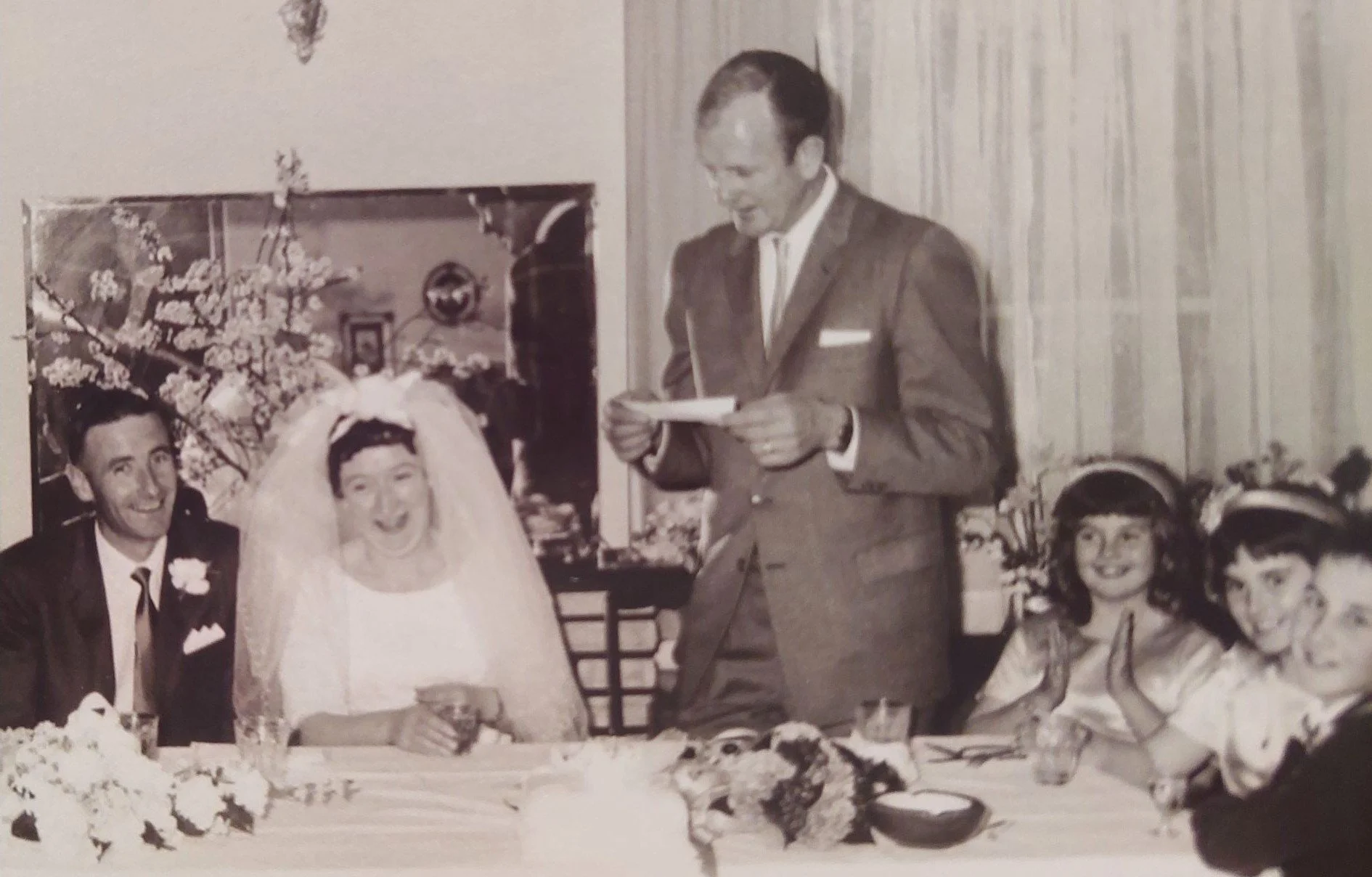
Isabel and I at their wedding, 1967.
While I was back in Bingley, I asked a local artist to do an oil painting of the old stone packhorse bridge so I could take the painting back to Australia with me. I also got them to do a painting for my parents of the church they were married in. The artist painted the time on the town hall clock as 3pm, which just happened to be the time that my parents were married!
I met Isabel on my way back to Australia on the SS Arcadia. She was coming out to Australia to teach primary school but she had no intention of staying.
We were married on 26 August 1967 at the Methodist church in Epping. It was my second marriage, which is why we weren’t allowed to get married in the Roman Catholic Church, which was Isabel’s denomination.
I have one son by my first marriage and Isabel and I have three children: a daughter in Hervey Bay, a son in Gympie, and another son living at home. None of them followed me into horticulture but my daughter studied agriculture and then psychology and my son is active in protecting native wildlife.
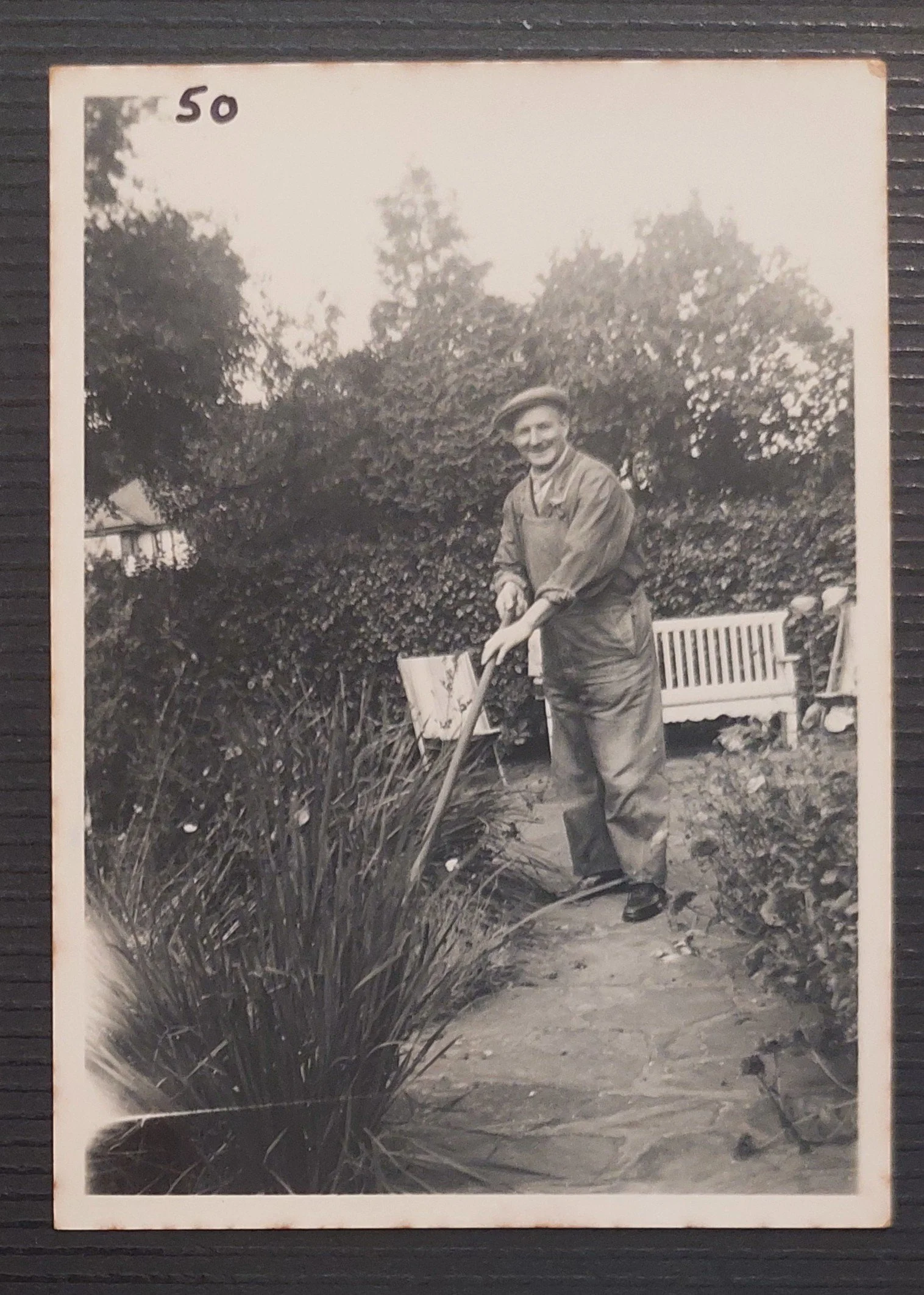
My father gardening in England, c.1953
My parents migrated to Australia in 1955, but they didn’t discuss their big move with me. They were good friends with the caretakers at the Mornington Road Primary School who had moved to Ararat in rural Victoria. They knew I had come to Australia in 1952 with the BBM because they saw the articles in the local newspaper. Three years later, unbeknownst to me, they sponsored mum and dad to come to Australia. They promised them a council house and a job in Ararat but neither eventuated. It was disastrous. If I’d known, I wouldn’t have advised them to come. I had to help them, even though I was only 19 years old and not earning a full adult wage yet. I rented a flat in Epping and they came to live with me in Sydney, because I knew there’d be more chance of my father getting gardening work in Sydney. He got a job with Mr Sutton maintaining the gardens at some of the large houses in Wahroonga. It was lonely for my mum, and her health suffered.
My parents were too old to get a loan because in the 1960s, home loans could only have a 25 year term and you could only use 25% of your wage to pay it back. I bought a house in Carlingford in 1963, and they lived there while I was still living at the Elanora Golf Club. My Mum wasn’t well, so they soon moved into a retirement village in Epping that had nursing home care as well.
In 1972 I left Elanora Golf Club and went to work at Ryde Council where I oversaw a team of landscapers and gardeners from 1972-1978. Then I worked for Clarence Council in Hobart for four years. The family came with me to Tasmania and we thought it might be a better place to raise our children. But the Tasmanians were so parochial, we could see that it would be difficult for non-locals to get a job. Plus, the weather was a bit unpleasantly cool! If you had a bad summer, you had to wait for the next summer before you had some good weather again.
We returned to Sydney and I worked for Ashfield Council from 1982 until I retired in 2001. I was the Parks Superintendent in charge of parks and grounds. I worked for 50 years and one month.
I miss home. I never thought I’d miss it so much. I’ve been here for 70 years but Australia’s not home. I live here, but it’s not home. I’m connected to the stone walls, to the moorland, to the woodlands, to the river, the stream, the accent, the people. I did think about returning to live near Bingley but Isabel likes it here.
I didn’t become an Australian citizen because I don’t think you can change your heritage. Australia’s a great country, but it’s not home.