

Peter Luckhurst
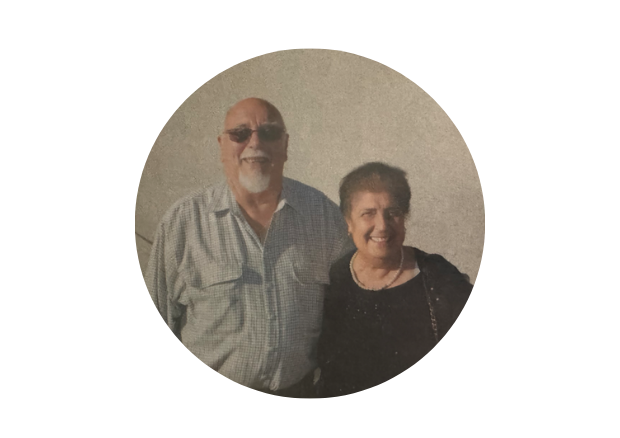
Ship name / Flight number: Orion
Arrival Date: 23/01/1954
I was born between my two brothers and the two world wars on 3 December 1936. For the first five years of my life, I called ‘Model Farm’ in Jackass Lane, Tandridge (Surrey) ‘home’. My father, Jack, bred Clydesdale horses on this stud farm. I remember the smell of the feed room, especially when the horse feed was mixed from large wooden bins.
The farm was close to the airfield at Biggin Hill and I can vividly recall the aerial dog fights during the ‘Battle of Britain’. We would shelter under the machinery shed and watch the flashes of gunfire and listen to the spent cartridges pinging our tin roof. We billeted some Canadian soldiers on our farm and my mother, Dorothy Kate (neé Sparrow), fell in love with ‘Big Bart’. He visited us when we moved to a farm to the north of London. The Canadian soldier went back to his wife and kids after the war, but this didn’t bode well for my parent’s relationship.
The government was worried about a possible invasion of England from the south, so they helped people to move from the south of England to Cambridge and London. We went to a farm north-west of London that grew strawberries, gooseberries and raspberries for Chivers jams and preserves. We also raised pigs for the war effort and kept cows to provide milk for the pigs. Although we were no longer being peppered by spent ammunition, we were still living near an airfield. I remember watching the planes taking off each evening and forming up overhead with other squadrons until the sky was full of planes about to fly across the English Channel to bomb the Germans. Then early in the morning they would return in dribs and drabs, some of them shot to pieces with some of their engines not working. They flew so low over our house that I could see pilots struggling to land their damaged planes.
One of my jobs was to help milk the cows. I thought it was fun to squirt milk from the teat into my mouth, but I didn’t realise that these cows had not been immunised, and the milk wasn’t meant for human consumption. I contracted a type of Tuberculosis (TB) called scrofula that affected my lymph glands and my neck swelled up as if I had a huge boil. I was quite sick and couldn’t go to school. Sometimes I didn’t have enough breath to walk around and had to be pushed in a stroller. I also contracted diphtheria, impetigo, measles, mumps and scarlet fever – my immune system was stuffed. My healthcare was linked to England’s fortunes in the war – after D-Day on 4 June 1944, when the course of the war turned, I was given a bed at a TB hospital in Tunbridge Wells, but when the war finished about 12 months later, they needed all the hospital beds for returning soldiers.
I was expected to die of this disease, but a brave, young doctor decided to cut the infection out of my neck. I have a big scar but I’m still alive and will celebrate my 90th birthday at the end of this year (2026).
After spending years being sick, I was keen for some adventure. I remember tying the corners of a sheet with a piece of cord and jumping off a barn roof pretending my sheet was a parachute. The consequences were a badly sprained ankle. Another time I was throwing a stick into a chestnut tree to knock down the chestnuts so we could play conkers, and the stick fell out of the tree and into my friend’s eye. We moved house again soon after this!
My parents separated after the war and I went to live with my mother and my younger brother, Barty, in Merstham, Surrey. My mother took a job in service as a cook and housekeeper and we all lived in the accommodation provided by her employer, the Rev. Lieutenant Colonel Wilkinson. Our home was an old church rectory on the Stribbling family farm, which had a big orchard and a lawn large enough for playing cricket. I remember this as a happy time because I was finally well enough to run around. I loved watching birds and climbing difficult and dangerous trees to collect an egg from a bird’s nest. I would carry the egg down the tree in my mouth.
I started school again at Merstham Primary after missing a few years and made two friends: Ian Barnard and Colin Stribbling. We stayed friends until I left for Australia with Ian in 1953. Ian’s father had TB and they lived on a small hut on Stribbling farm. His family was poor like mine, whereas Colin’s family owned all the land we roamed around on. Sometimes we would help on the farm, steering the tractor, which made us feel grown up. We were quite independent and would go on day trips together to tick-off train and bus numbers. British Railways used to put out books with the numbers of all the locomotives, and it was a fun hobby to tick them off when you saw them.
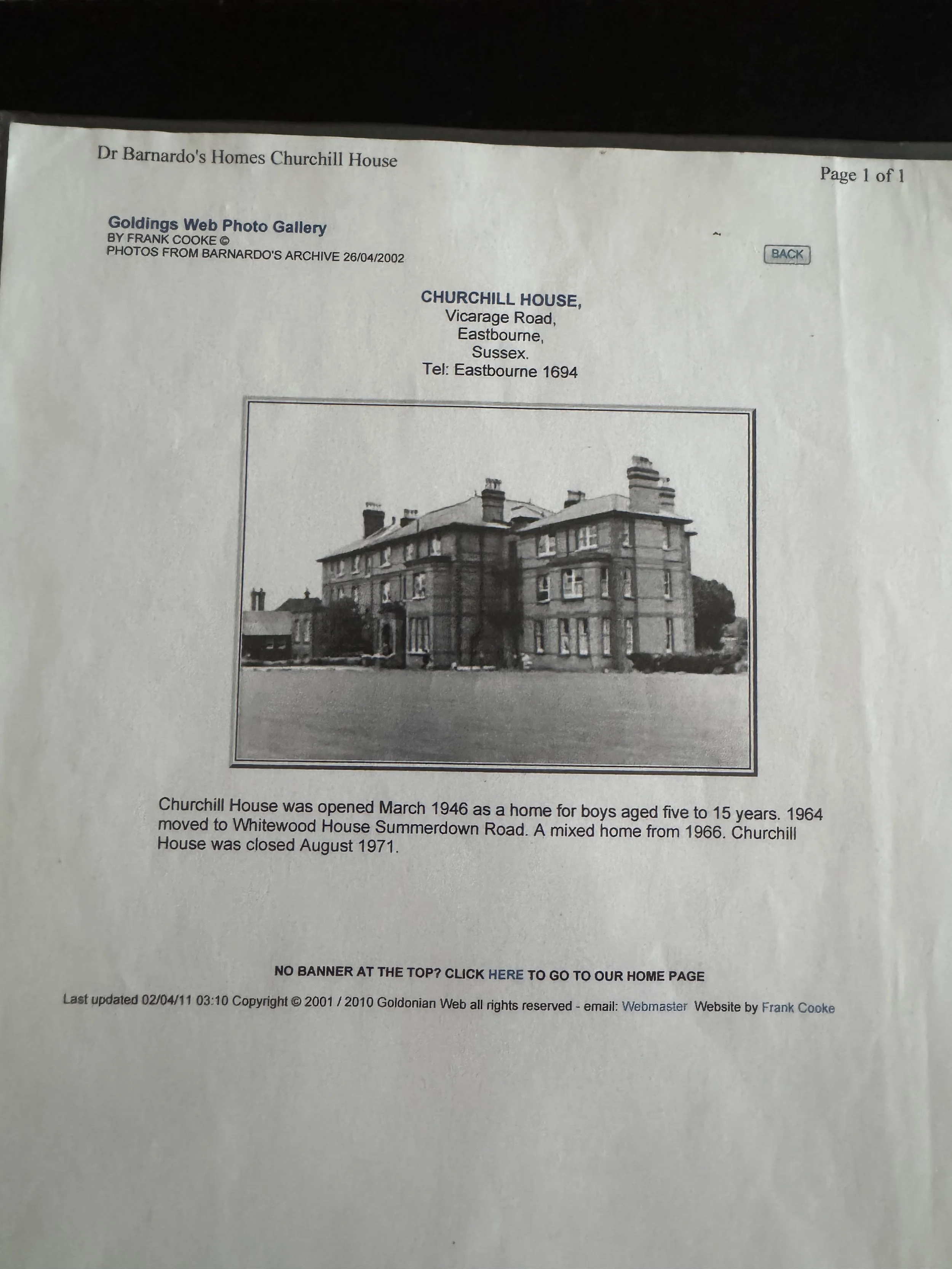
When the elderly rector died, my mother had to move to another employer who provided accommodation. She went to work for Dr Weir who had lost a leg in World War I. I had to catch a bus to Reigate Grammar School which was a very old traditional school with prefects. When her employment ended there (I’m not sure why), she got a position as a cook at ‘Churchill House’, a Dr Barnardo’s Orphanage in Eastbourne on the south coast of England. It was a paedophile’s paradise. I made it clear to some of the staff that I would scream the place down if they tried anything on me or my brother. We were left alone from prying fingers but I hate to think what happened to some of the boys.
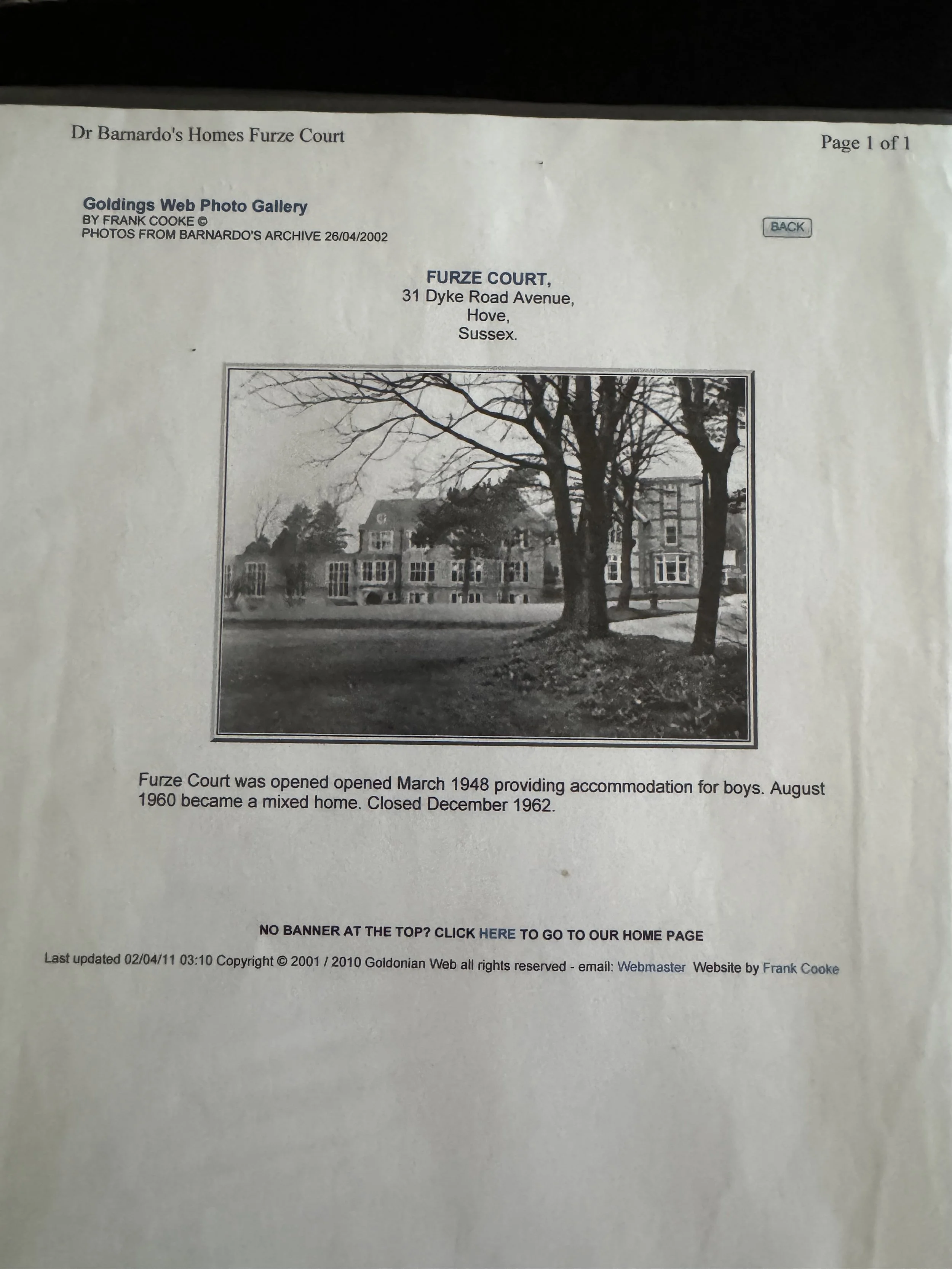
After a year we were on the move again. We went to another Barnado’s home on the coast in Brighton/Hove where my mother was the head cook and I went to my fourth grammar (public) school in five years. They all had slightly different syllabuses and I struggled because I had missed key parts of maths, French and Latin. Let’s just say that I didn’t top the class when I was finally old enough to leave school. The only subject I passed was geography because, unlike the set texts for English or the exercises for maths, the location of the countries didn’t change! Because I couldn’t follow what was being taught, I acted up and I was a pain in the arse to most of the teachers – detention and the cane were the norm. I remember that I used to stub my cigarette out on the school walls as I walked in.
My three years of living in Barnardo’s orphanages in Eastbourne and Brighton were pretty gruesome. One day in the summer holidays, after a row with my mother (which became more frequent in my teenage years) I took off on my bike and rode about 30 miles to Merstham. I went back to the Stribbling family farm and Mr Stribbling called my mother to let her know that I was OK. He said I could stay and help out with the thrashing (the process of separated wheat from the sheafs). It was good to have something to do and to see Colin again.
Back at Brighton, I bought an air-rifle with my savings from my paper-run and fruit deliveries. I was nearly arrested for shooting pellets at the sides of buses that went by. I was also getting involved in a few minor criminal incidents with some of the Barnardo’s boys, so my mother decided it was time to move again.
She found a job near my grandparents in Oxted, Surrey, and I went to live with them. My mother’s parents were wonderful people who had a good reputation in the local area and I tried not to do anything that would embarrass them. They had a bathtub in the kitchen which was covered with a tabletop when it wasn’t used for the weekly bath. You boiled the water on the gas stove, poured it into the bath, added a bit of cold water and jumped in to wash yourself as quickly as possible before it got cold. I did a paper run every morning and I supplemented this with a job in a market garden. This, and all the sport I played at (yet another) school kept me fit. When I finished school, I was told not to bother trying to join the Old Boy’s Association because I wouldn’t be welcomed. I found work on a dairy farm (with tested cows) and although I didn’t mind the work, I knew I didn’t want to do it for the rest of my life.
I had to take the train to Scotland to visit my father every so often and I would call into Merstham to visit Colin Stribbling and Ian Barnard on my way back to Surrey. One day when I called in, Ian wasn’t home and his mother told me that he was seeing someone about going to Australia with the Big Brother Movement. What? Where? I immediately wanted to go with him. I was 16 years old with limited job prospects and nothing to keep me in England. My mother had to sign my application form and at first, she refused, but after lots of arguing she agreed, probably because she was sick of me!
I applied at Australia House in September 1953. They were worried about my history of TB but I passed my medical test. I got my papers to go in February 1954, but Ian was due to sail in December 1953. I wanted to go with Ian – that was my plan. Then I got a letter saying there was a vacancy on Ian’s boat. Hooray! I was 17 years and 2 weeks old when I boarded the boat just before Christmas. My mother and younger brother came to London to say goodbye but they didn’t come to Tilbury dock because it was shrouded in a pea-soup fog. After all the anticipation, we were 12 hours late leaving Tilbury, waiting for the fog to lift.
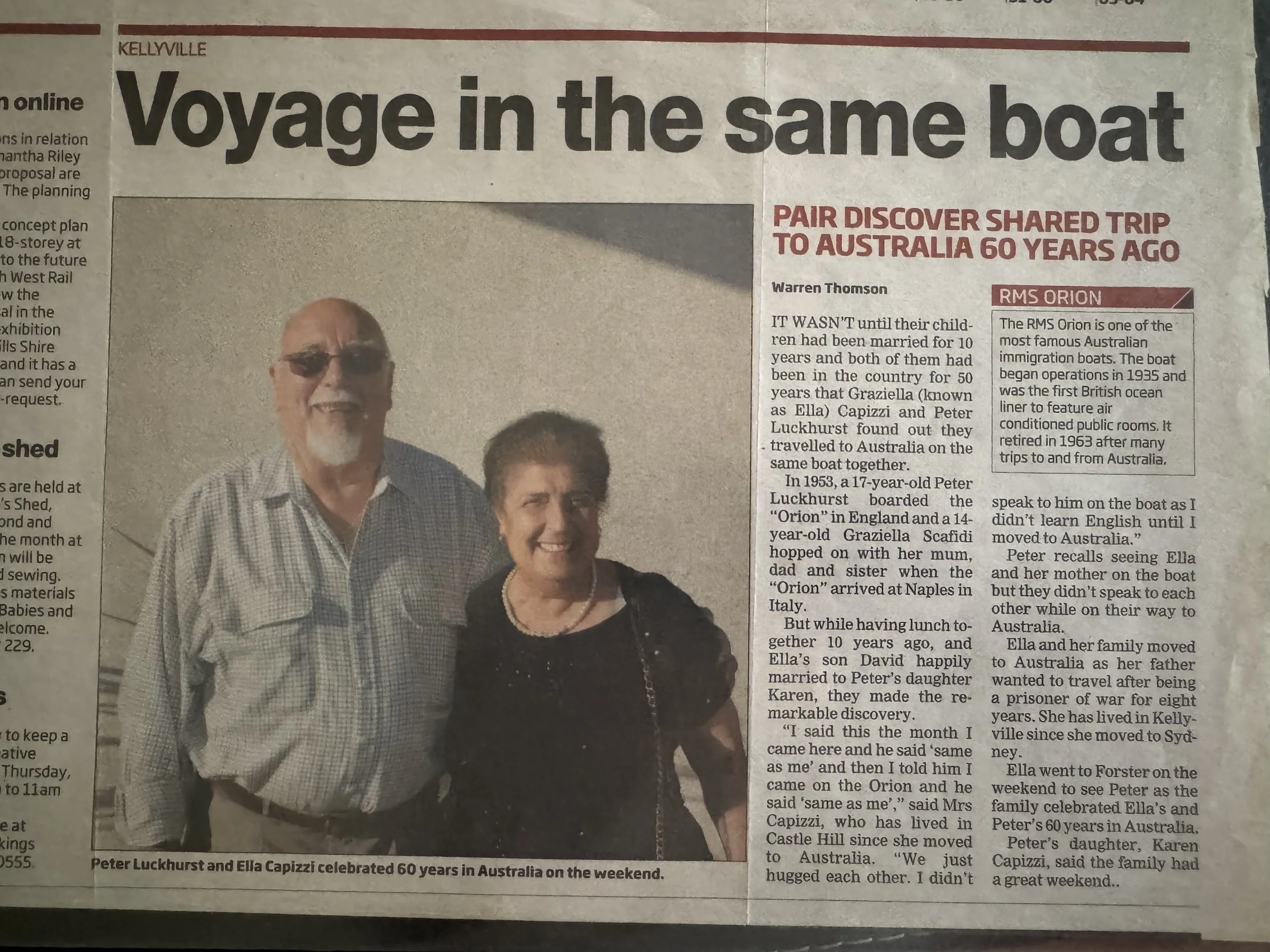
Our voyage on the RMS Orion was unbelievable. When we sat down for our first meal on the boat, I was given a menu card and I didn’t know what it was. There were two things listed for entree, dinner, and dessert and I told the waiter that I couldn’t eat all that food! He explained that I had to choose one dish for each course. I’d never eaten so much. We thought it was our introduction to the high life (even though we were travelling on the cheapest class of ticket)!
Six of us were cramped into a small cabin on H deck – just above the propellor, which would shudder whenever it came out of the water. This made for a bumpy voyage, but we didn’t mind because it was such a novel adventure.
We volunteered to help with deck games, setting up quoits etc. This gave us some privileges, such as steering the ship from the bridge. It was also a good way to meet some lovely people. I had a sense of adventure and with Ian beside me, I felt more confident. Ian was clever and I was a clown – a smart arse.
The crew said it was the easiest voyage they’d ever had. The Bay of Biscay and the Australian Bight are often rough but they were like millponds. It was only choppy in the Mediterranean. Our first stop was at the port of Naples, Italy, and we went to see the ruins of Pompeii. It was remarkable, as was the Suez Canal. Every port we docked at, we had an excursion organised by the BBM. At the port of Melbourne, I was told that my excursion had to include a haircut! I didn’t know it at the time, but the mother of my future son-in-law was also on the Orion!
Bob McCall was our supervisor onboard. I still have the autograph book that he wrote this verse in by Adam Lindsay Gordon:
“Life is only froth and bubble
two things stand like stone:
kindness in another’s trouble,
courage in your own.”
Thanks for your friendship on our voyage to Australia
Wherever the path of life leads you, my best wishes, and offer of help goes with you. 19/01/54
On 23 January we entered Sydney Harbour. Bob told us to make sure we were on deck when we went through Sydney heads. I remember that January day: the sun was shining, the water was sparkling, and there was the Sydney Harbour Bridge! It was a complete contrast from the day we left England. I’ve never been homesick since.
Once we docked in Sydney, we were taken to the BBM farm in Liverpool. A few of us used to sneak out to buy tobacco at the service station on the main road. Ian and I decided to make a run for it: we had had enough of being told what to do. We packed our bags, went to the service station, and hitch-hiked to central railway station.
We already had our travel vouchers and went to the big destination board in the station to decide where we would catch a train to. We decided to split up, because we thought it would be easier to find work separately. Ian saw “Wagga Wagga” on the board, which reminded him of the famous butcher from Wagga Wagga and the Tichbourne case. A place called ‘Dubbo’ was next to ‘Wagga Wagga’ on the destination board, and we asked someone where these two places were. When we heard that both places were about 300 miles from Sydney, we decided to go to Wagga Wagga and Dubbo, assuming that we could see each other on the weekends. We didn’t realise that although both places were a similar distance from Sydney, they were 400km apart!
When I arrived at Dubbo train station, I was sent to a stock agent to ask about farm work. He suggested that I get back on the train and go to a small place called Eumungerie. He promised to contact a farmer, Angus McClennen, and tell him I was coming. I disembarked at the small station; there was no one about, no shops, just one pub. I learned later that the population of Eumungerie was no more than about 50 people. A ute pulled up and a bloke poked his head out of the window and asked: ‘are you the Pommy bloke who’s going to work for my brother?’ ‘Yes’, I said. When he asked me: ‘where’s your luggage?’, I realised I had accidentally left it on the train! ‘Ah, ya stupid Pommie bastard, jump in’, he said, ‘we’ll get the station master to send it back on the next train’.
I climbed into the ute and we started driving through the forest (except it’s called the bush in Australia). The first gate we came to, we sat in the car until Peter McClennen told me that I had to get out of the ute and open the gate. I struggled with the latch but eventually managed to open the gate, then got back in the ute. Once we had driven through the gate, we sat in the ute again until Peter said: ‘well are you going to get out and shut the gate, ya stupid Pommie bastard?’ There were about six gates to open and close on the drive to my new home. By the time I arrived, my good clothes were soaked through with sweat and covered with dust and all my other clothes were in my suitcase which I’d left on the train.
On my first drive in the Australian bush, I saw this huge lizard that looked like a prehistoric monster running beside the road. This was my first sighting of a goanna or lace monitor, and I was glad I was in the ute and not opening or closing a gate when I saw it!
Angus McClennen’s 6,000 acre property was miles from anywhere. He was a bachelor and lived in the big house while I lived in the shearer’s shed. He was a good bloke but a bit odd and demanding. Later, I was told that he was a POW (Prisoner of War) in Changi; which explained some of his strange behaviour. His brother Peter, who had picked me up from the train station, had a farm 100 miles away near Nyngan.
I arrived on a Wednesday and on Friday while we were having cold mutton followed by stewed peaches and custard for dinner, I told Angus that I’d like to visit my mate Ian Barnard in Wagga Wagga over the weekend. I asked him how I could get there, and at first, he thought I was having a lend of him. When he realised that I was in earnest, he had another reason to call me a ‘stupid Pommie bastard’. It wasn’t until he showed me on a map how far Eumungerie was from Wagga Wagga, that I believed him, and then I think I cried. I suddenly felt lonely and isolated and a long way from home.
Because I’d driven tractors and worked on a farm before, I had no trouble adjusting to the work. I ploughed the fields to plant wheat and dug out the weeds with a hoe. Sometimes we would plough 24 hours/day – I did the night shift on the tractor and was supposed to sleep in a tin shed that was hot as hell during the day. The stars at night and the lightning strikes from dry storms were absolutely breathtaking.
I learnt to ride a horse bare-back and round up the cows for milking. It was lonely on the farm and some days I felt closer to my horse than my boss. The only visitor to the farm was the mailman who came in a horse and cart every Monday and Thursday. There were a few more people around when they were shearing the rams and I liked the company. I worked in the sheds as a roustabout.
We shot kangaroos and foxes on the farm. I skinned a fox, dried the pellet and sent it to my mum thinking that she would like a fox-fur stole. It mustn’t have dried out properly, because when she opened the parcel in England, it was crawling with maggots. She was not impressed.
I knew the food on the farm wouldn’t be as good as on the Orion, but I didn’t expect to have mutton nearly every night! I also didn’t expect that I’d have to string a dead sheep up from a tree, slit it open from top to bottom, and pick up the entrails that fell out and feed them to the farm dogs. I think the look of revulsion on my face was a source of amusement for Angus. (Ian, on the other hand, had found work with a family who treated him as another son.)
After four months at Eumungerie, I felt lonely and isolated. I had only been allowed off the property twice: once to go to a dance at the Eumungerie Memorial Hall and the next time to go to the Gilgandra show. I had been to local fairs in rural towns in England but this was completely different! I went into a big marquee with lots of noise and cheering and discovered a boxing ring. The showman was spruiking for men to ‘av a go’ and the prize was five pounds if you won three rounds. I saw this skinny Aboriginal lad in the troupe so I put my hand up to fight him. I think he let me win the first round but I was out for the count in the second. That was my first encounter with Jimmy Sharman’s Boxing Troupe.
On the ship to Australia, I met a police sergeant from Sydney who was bringing his wife and daughter home. He gave Ian and I five pounds each and said: ‘if you ever get stuck in Sydney, come and see me’. I wasn’t in Sydney, but I was stuck, so I decided that I’d catch the train back to Sydney and look up Mr Holt. Ian was happy on his farm in Wagga Wagga and decided to stay put.
I packed my bags but Mr McClennen refused to take me to the train station. I think he was upset that I was leaving. I was determined and started walking the 20 miles to the train station. When he saw that I really was planning to leave, he drove up and took me to the station in his ute.
I wrote to my mother and told her that I was leaving the farm. Her reply reached me in Sydney and informed me that my granny had died three months after I arrived in Australia. I was really sad about this, because she had taken me in so we could leave Barnardo’s. She taught me a good lesson about life that I’ve tried to remember. If I was whinging about something, she’d say: ‘Peter what happened one minute ago you can’t change. Get on with your life.’
I found the Holt family in Sydney and paid back the five pounds they had given me. They helped me to find somewhere to live, in a boarding house in Sans Souci, which was not too distant from their place in Ramsgate.
I’m not sure how I got my next job, but I think BBM helped me to get a job with Oliver (Ollie) Oberg who was president of his Rotary Club and also co-owned a timber mill in Mascot called Thatcher and Oberg’s. I started as a clerk in the office but it was not my cup of tea. I’d been living on farms all my life and resented being indoors. They soon shifted me to the timber yard, which suited me much better. I was earning £11/1/0 per week – far more than I got for working nights on the farm. I went to East Sydney Technical College to do a course on wood technology and all aspects of the timber industry. There was a real mix of nationalities working in the timber yard – Italians, Aborigines, Greeks, and Poms like myself. Jimmy Little, who was the same age as me and an excellent singer, worked there too and sang at our Christmas party.
Ian Barnard came back to Sydney and we re-connected through the Holt family. We shared a flat together with two other blokes from the Orion. We had an absolute ball. We lived in Mosman, and ‘up the cross’ (Kings Cross). It was a bit of a wild time but a good time.
Mr Holt worked in the police force and I started dating his daughter, Therese. She was a strict Catholic and one night she took me to midnight mass with her family. When they stopped at the entrance of the church to genuflect, I accidentally walked over the top of them! After this, I decided that Catholicism was not for me. I was raised a protestant, so it wouldn’t have worked.
However, she did help me to get my next job. Therese was secretary to a Hungarian man who was supplying transformers to the Snowy Hydro scheme. He wanted someone to cut the trees down so they could erect transmission towers. I successfully applied for the job and spent 12 months living in a caravan in the freezing cold Monaro district knocking trees over. We used old USA army equipment like jeeps and bulldozers with left hand drive. My boss, Tom Guler, was a former Olympic wrestler – his body was like a tree trunk.
When my contract finished, I returned to Sydney and found work at Hudsons, another timber yard at the industrial end of Glebe. I was lonely, having lost touch with Ian when I moved to the Snowy, and decided to get a second job to fill the evenings. The government had recently allowed bars and pubs to stay open until 10pm, and I scored a job as a waiter at Lousy Les’s hotel near Tom Ugly’s Bridge on the Georges River. This wasn’t far from where I was living in Dolls Point.
Around 1955, I received a letter asking me to go to the ABC Studios in Sydney to speak about how and why I came to Australia. My mother and brothers heard the radio program broadcast on the BBC in England. I’m not sure if this is why I later received an invitation to a state reception for HRH Princess Alexandra of Kent at Sydney Town Hall in 1959.
Commuting to my day job in Glebe was getting tiresome, so I went back to Thatcher and Oberg’s in Mascot. One job led to another. I met a returned soldier there who was a member of the Coogee-Randwick RSL Swimming Club and he helped me to get a job at the RSL as a casual waiter or bartender on nights and weekends. I soon worked out that with weekend penalty rates and tips, I could earn more at the RSL than in my day job at the timber yard. I took a full-time job at the RSL Club and enjoyed working there for a few years. One of my roles was to hire the entertainment and I was able to get Jimmy Little to do a gig because of our connection through Thatcher and Oberg’s.
I also met Val (Valerie) through my job at the club and we married in 1961. We lived in Coogee and soon had two daughters.
The supervisor’s job came up, but I wasn’t a returned soldier and it was RSL Club policy that the job had to go to one of them. I knew that if I wanted to progress, I’d have to go to a different hotel, so I moved to the Randwick Bowling Club. During the three years that I worked there, I met the director of the RSL club in Revesby. He suggested that I apply for the assistant manager’s job at his club, and I got it. We bought a house in Revesby and moved from the eastern beaches to the south-west of Sydney.
By 1966 the RSL had changed their policy about only giving the top jobs at RSL clubs to returned soldiers. When I was 31 years old, I was offered the job as secretary-manager of Revesby Heights Ex Serviceman’s club and became the youngest person in that role in NSW. I worked there for 11 years and made some good friends.
My job involved working nights and weekends and after 13 years my wife and I decided to go our separate ways. In 1976 I went back to England for the first time because my father was dying. I didn’t feel the need to see him before he died, because I hadn’t lived with him since 1940 and one of my strongest memories of my father was when he punched my mother in the face during an argument; but Michael, my older brother, really wanted me to come back.
Michael picked me up from the airport and we walked to where his car was parked. He was carrying one of my bags and when he threw it into the back seat of a golden Mercedes sports car, I didn’t believe it was his car! I had no idea you could make so much money working in insurance. Michael drove me to his mansion and told me that our father had died while I was on the plane.
I rang my mother for the first time in 22 years and said: “it’s Peter here”. She replied: “Peter who?” She probably didn’t recognise my Aussie accent but it hurt when she said she was too busy to see me for a couple of days. I had a good look around England but it didn’t do much for me. I only had my two brothers and my mother to visit and I couldn’t get back to Australia quickly enough.
When I returned to Australia I fell in love with one of the patrons at the Revesby RSL and Jan and I married in 1977. She had three boys from her first marriage and we had our honeymoon in Foster-Tuncurry with her youngest son and his ten-year-old mate! When I saw the role of secretary-manager of the Foster-Tuncurry Memorial Services Club advertised, I decided to apply for it as we both wanted to move to the central coast. I got the job and we lived there for ten years. I had time to do some community work and volunteered as president of the oyster festival in Foster, treasurer of the jockey club, and a sponsor of a local FM radio station.
After 31 years working in clubs, I was looking for something different to do. I joined the Country Comfort chain of motels and Jan and I did ‘trouble-shooting’ in places like Port Macquarie, Coffs Harbour, and Cairns. The company would send us to a motel that was losing business and we’d try and turn it around. In our two years at Port Macquarie, we had the highest occupancy of any motel in Australia. It was good fun, but hard work. All the motels had restaurants in them, so we often worked long hours.
When I was 58 years old, I decided to retire to a house we had bought a few years earlier in a small coastal town called South West Rocks. It was a silly decision because I was bored. This prompted me to open a lolly shop at Nelson Bay, which is about three hours north of Sydney and attracts a lot of tourists and retirees. There was a ready market of grandchildren visiting their grandparents and asking for sweets. My retail business grew into a wholesale business supplying other lolly shops. After ten years in Nelson Bay as the ‘lolly man’, I decided to downsize a bit and my mate in Foster sold me his lolly shop. I worked there for ten years and retired properly in 2012 when I was 76 years old.
I’ve had a good life, just mucking around. I’m not a millionaire, but I live in a beautiful part of the world. I wouldn’t have come to Australia without the BBM.
All out kids have seniors cards now! My oldest daughter, Shari, is a radiographer and does locums in remote part of Australia, including Christmas Island. Karen, the youngest, lives in Sydney with her family and comes north to visit us when she can.
I’ve had quite a life. I’ve made some mistakes, I must admit, but overall, it’s been fantastic. I couldn’t have done any better in my life if I’d tired. Both my brothers are still in England but I’m glad I’m not living there. Barty, who is nine years younger than me, lives in Nottingham and does oil paintings and restores old masters. Michael, my older brother, is a millionaire but he had a stroke. Because we didn’t live together as a family after 1940, we aren’t close.
I still have the autograph book that I had on the Orion. It has all the names of the other ‘Little Brothers’ who came on the boat with me and the places they immigrated from: Dundee, Glasgow, Surrey. I’ve lost touch with Ian Barnard, who was the reason that I came out to Australia. I’d really like to hear from him again.